
Thane’s skyline has changed dramatically over the past decade. What were once standalone bungalows and small chawls have given way to sprawling residential complexes, gated townships, and high-rise societies housing hundreds of families under one roof. With this growth in scale comes a growth in risk more entry points, more visitors, more deliveries, and more anonymity between neighbors who may never actually meet each other. For housing society committees and residents alike, professional residential security has shifted from a luxury to a basic necessity.
The Changing Face of Residential Risk
A few decades ago, a single watchman with a lathi and a logbook was often enough. Today’s housing societies face a very different set of challenges. Multiple gates and service entries, frequent courier and food-delivery traffic, domestic staff turnover, visitor management for events, and the sheer number of unfamiliar faces moving through common areas every day all add up to security gaps that a single untrained guard simply cannot manage alone.
Add to this the reality of urban crime patterns theft from parked vehicles, unauthorized entry during odd hours, disputes between residents and outside parties, and even isolated incidents of harassment or trespassing and it becomes clear why housing societies across Thane are increasingly turning to organized, professionally managed security services rather than informal arrangements.
What Modern Housing Societies Actually Need
A safe residential complex isn’t just about having a person standing at the gate. It requires a layered, well-coordinated approach:
Verified and trained personnel – Security guards deployed in a residential setting are interacting with families, children, and elderly residents every single day. Background verification, police clearance, and proper training in conduct, communication, and emergency response are non-negotiable
Round-the-clock vigilance – Risk doesn’t follow office hours. Late-night deliveries, early-morning joggers, and overnight parking areas all need consistent coverage. A 24/7 security presence, with proper shift rotation and supervision, ensures there’s never a window of vulnerability.
Structured visitor and vendor management – Every housing society deals with a constant stream of guests, cab drivers, maintenance staff, and delivery personnel. Without a system to log entries, verify identities, and confirm with residents before granting access, gates become a formality rather than a safeguard.
Access control at multiple points – Large societies often have several gates, basements, and clubhouse entries. Coordinated access control rather than each entry point operating independently closes the gaps that intruders typically exploit.
Quick emergency response – Fire, medical emergencies, or security breaches require guards who know the property layout, understand escalation protocols, and can coordinate with local police or emergency services without delay.
Why DIY or Informal Security Often Falls Short
Many housing societies in Thane still rely on individually hired watchmen with no formal backing, training, or accountability structure. While this may seem cost-effective on paper, it often creates more problems than it solves. There’s no backup if a guard falls sick or doesn’t show up. There’s no standardized training, no uniform conduct, and often no real verification of background or character. When an incident does occur, there’s no larger organization to take responsibility or assist with documentation and follow-up.
A professionally managed security service, on the other hand, brings structure: trained replacements when needed, supervisory oversight, standard operating procedures for entry and exit, and accountability that an individually hired guard simply cannot offer.
The Role of Technology Alongside Manpower
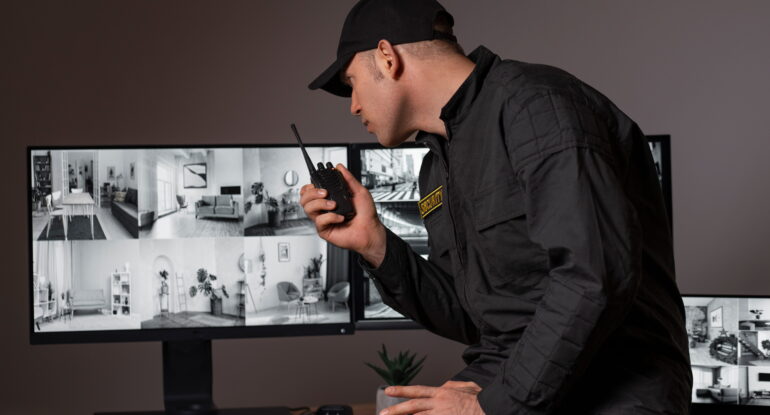
The best residential security today doesn’t rely on manpower alone. Modern societies benefit from a combination of trained guards and supporting technology CCTV coverage at entry points and common areas, visitor management apps or registers, intercom verification systems, and alarm systems for boundary walls or restricted areas. Guards backed by this kind of infrastructure can respond faster and more effectively than manpower working in isolation.
This is exactly the layered approach that experienced security providers bring to the table: skilled, background-verified guards working in tandem with surveillance and access systems, rather than either element trying to do the job alone.
What to Look For When Choosing a Security Partner
Housing society committees evaluating security providers should look beyond just cost per guard. Key questions worth asking include:
- Are guards background-verified and properly trained?
- Is there 24/7 supervisory support, not just guard deployment?
- Does the provider offer a quick replacement process for leaves or absences?
- Can they customize coverage based on the society’s specific gates, common areas, and risk points?
- Do they have experience securing similar residential complexes in Thane?
A provider that can answer these confidently and back it up with a track record of reliable security solutions far more likely to deliver consistent, dependable protection over time.
Building a Safer Community, Together
Ultimately, residential security isn’t just about preventing incidents it’s about giving residents the peace of mind to live without constantly looking over their shoulder. Children should be able to play in common areas, elderly residents should feel safe taking an evening walk, and families should be able to step out without worrying about who’s watching their home.
For housing societies in Thane looking to upgrade from informal arrangements to a structured, professional security setup, the investment pays for itself many times over not in numbers, but in the everyday sense of safety it brings to every resident within the gates.
Looking to strengthen security at your housing society? Get in touch with our team for a free consultation and a security plan tailored to your community’s specific needs.